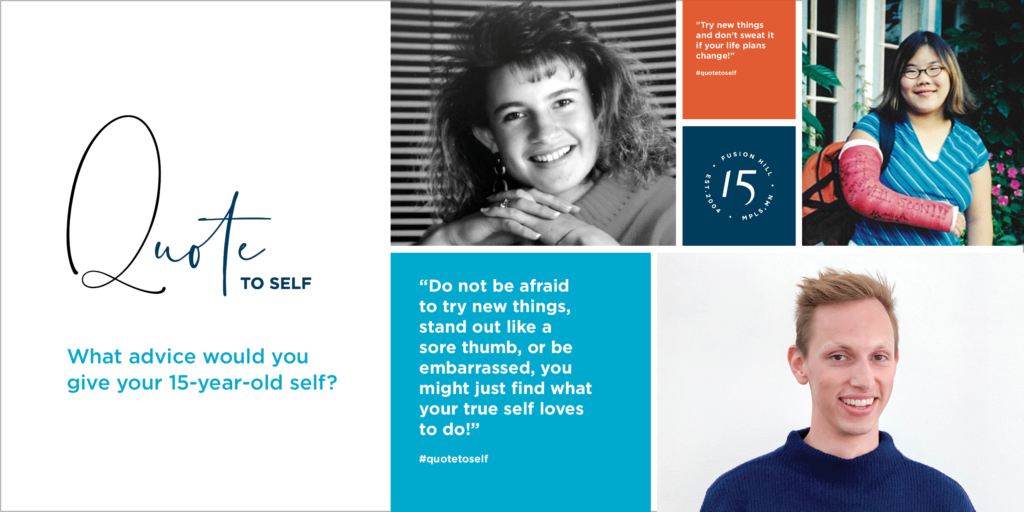
In honor of our 15th year of Insight & Imagination, we recently kicked off a special project called “Quote to Self.” If you haven’t seen it yet, check out the submissions on Instagram answering this one question: “What advice would you give to your 15-year-old self?” It’s been exciting to hear the sage advice (and see some great throwback hairstyles) rolling in from our research participants, clients, employees and friends from all corners of the country. And while it develops week by week on Instagram, the project will go global in May and culminate in a consumer insight report with an exhibit at our September anniversary party.
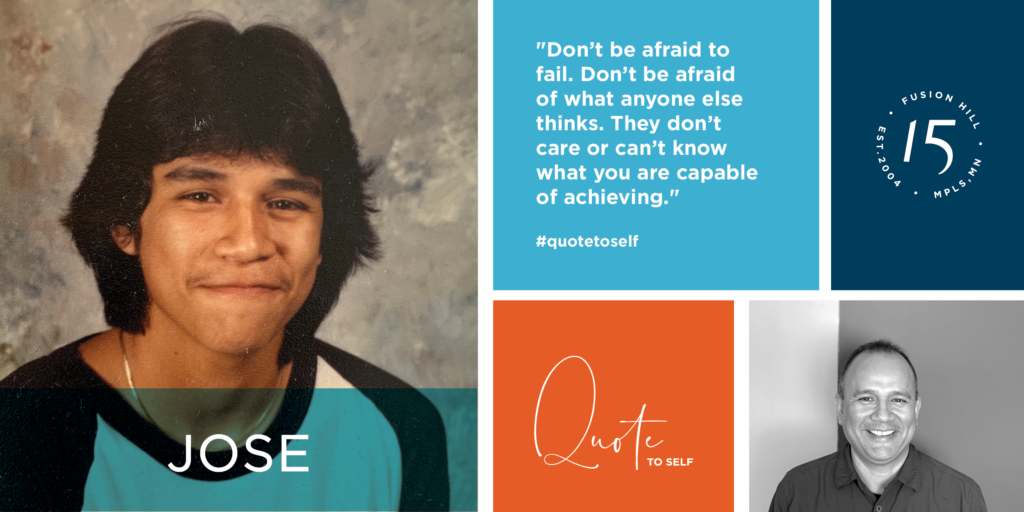
Here’s a spotlight on one of our early contributors – Jose:
Born in July 1965, Jose from Hazel Park, Michigan, turned 15 in 1980, when Rubik’s cube and Pac-Man were released and became popular icons. In that same year, Mount St. Helen’s erupted and the USA men’s Olympic hockey team won gold – after defeating the Russian team in the “Miracle on Ice” – while Blondie topped the charts with “Call Me.” When we asked Jose what advice he’d give to his younger self, he stated:
“Don’t be afraid to fail. Don’t be afraid of what anyone else thinks. They don’t care or can’t know what you are capable of achieving. Be weird, be bold, be ready to step out and feel new air on your face.”
What memories do you have of being 15? And what advice would you give to yourself at that age? We’d love to hear from you!
Visit our Quote to Self website to download an editable form and submit your responses to quotetoself@fusionhill.com. And to see the project in action and watch for your own quote, visit and follow our Quote to Self Instagram and Facebook pages.
Here at Fusion Hill we are passionate about keeping up with industry trends and ensuring our methodologies and deliverables keep us ahead of the curve and providing successful outcomes for our clients. Where better to brush up on our skills than at the 2019 Qualitative Research Consultants Association (QRCA) annual conference in Savannah, Georgia, with over 250 of the industry’s top qualitative researchers? Here are some of our key takeaways from this year’s event:
Neuroscience: Using behavioral science to understand decision-making, elicit deeper truths and be more memorable
From storytelling to design study, a basic understanding of neuroscience and behavioral economics provides the rationale for our best research practices, ensuring that we are communicating the most valuable findings in the most memorable way.
People will forget 90% of what you tell them, so it is critical to be intentional in crafting your content and the 10% your audience will remember. Framing key takeaways in familiar mental models and heuristics ensures they will strike a chord with your audience. Bonus points for adding small twists and surprises that balance familiarity with novelty and leave your audience intrigued.
Consumers also expect to communicate within familiar mental models. When in the field, researchers must be aware of the various outside factors that color a participant’s behaviors and responses – everything from the words we use in our questions to current events can affect how participants respond.
Even more than mental models, behavioral science tells us that emotion is a key driver for adding meaning and getting to deep truths. Good researchers know that fact does not necessarily equal the teller’s truth and that by following the emotion, we are able to evoke meaningful and rich insights that are invaluable for strategic business decisions. One way we use the power of emotion is through storytelling. Studies have shown that storytelling creates emotional resonance and produces high levels of oxytocin for both the audience and the storyteller, leading to a more unforgettable presentation. By seeing the story in everything, we are able to provide meaningful and memorable detail that may be unavailable otherwise.
Design thinking:Moving from moderating to strategic facilitation
Design thinking is a method of analyzing research findings and turning them into actionable business opportunities using collective, solution-focused thinking. In design thinking, researchers are more than just moderators; they are strategic partners and facilitators who use their experience and empathy skills to keep the ideation process rooted in the consumer’s needs. Design thinking is an increasingly popular insights method as clients face ever tighter deadlines and shifting business targets. At Fusion Hill we have always had a strong focus on actionable insights and have facilitated ideation sessions that allow our clients to quickly translate customer feedback into here-and-now business strategies.
Creative approaches: Thinking outside the question-and-answer box
Our team is always on the hunt for creative, new qualitative research techniques. This year’s QRCA sessions focused heavily on refreshing tried-and-true techniques, from theater games and improv to quick get-to-know-you activities. Good qualitative moderators know that even a 5-minute activity can have immense benefits – energizing participants, shaking up group thought, breaking down self-censors, and triggering new ideas and connections. When used correctly, these out-of-the-box techniques help us push both clients and respondents out of their comfort zones and illuminate previously inaccessible connections and insights.
Role-play is another creative approach for getting deep insights when dealing with sensitive topics. Role-play helps us get to truer conversations while protecting privacy and avoiding the logistical hurdles associated with on-site ethnographic research. This is especially true in health care, where gaining access to confidential patient-doctor conversations is not only tricky but also sometimes unethical. Our team attended a fascinating session on using medically trained actors as a methodology for interviewing doctors. This creative approach allows researchers to better understand language around a topic or product, as well as explore decision-making in the moment and test how variables may shift it. If you are interested in pursuing this methodology, let’s talk!
Keeping the conversation going
Reach out to us at Fusion Hill to learn more about our approach to qualitative research and how we are continually improving our ability to answer your most pressing questions.
Imagine yourself at age 15. Where were you living? What fashion mistakes were you embracing? What goals did you want to achieve in your lifetime? These questions have been on our minds as we reflect on our own 15 years of insight and imagination at Fusion Hill. And in honor of our anniversary, we’re launching our Quote-to-Self project. The goal is to hear how people answer this one question:
What advice would you give to your 15-year-old self?
What would you say to younger you? We hope you’ll participate by filling out this form. Bonus points if you ask your friends, family and coworkers to complete it too!
As we travel the country – and the world – in 2019, we’ll ask the same question of our research participants we meet in the field. It’s all part of our drive to discover what similarities connect people and what traits make them unique.
We’ll share responses and insights throughout the year on our Quote to Self Instagram account. Be sure to follow us to see the project grow!
Sharing our good fortune is a core belief at Fusion Hill, and over the past 15 years we’ve done pro bono work to help children, families and aspiring creatives. We also invite employees to volunteer for causes they believe in on company time – for a total of 2,000+ hours last year alone.
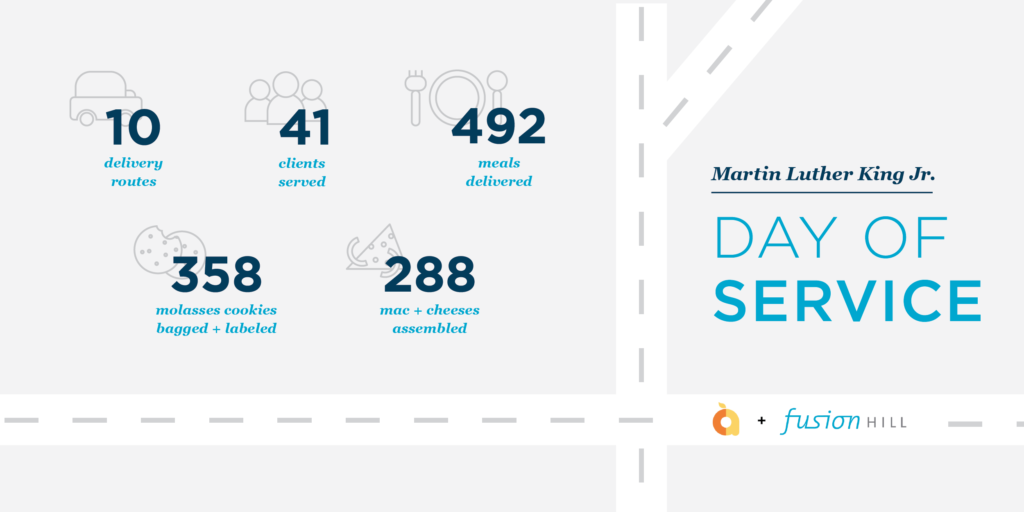
As our company has grown, we’ve been fortunate to participate in a companywide initiative that brings employees together to volunteer on Martin Luther King Jr. Day. For the third year in a row, we spent Monday at Open Arms of Minnesota, where we cooked and delivered nutritious meals to individuals with life-threatening illnesses, their caregivers and their dependents. With our staff of 40+, we assembled our team into two groups, which enabled us to package 288 meals and deliver 492 meals.
As always, we’re grateful for the opportunity to give back to our community. And for the great people and welcoming atmosphere at Open Arms.
While New Year’s is typically a time of anticipation for what’s ahead, 2019 is also a year of reflection for Fusion Hill. That’s because we’re celebrating our 15th anniversary.
January 7, 2004, marks the official day Kerry and Kasey launched what has grown to a team of 40+ employees. But we’ll be celebrating all year long with a year of giving, an anniversary party this fall and more.
We kicked off our year of giving with a holiday gift that included hat donations to charities that serve the homeless in the Twin Cities and other locations where Fusion Hill employees live. At the same time, we gave financial support to help launch 15 women-owned small businesses through Heifer International.
In honor of Martin Luther King Jr. Day, we’ll once again volunteer our time at Open Arms of Minnesota, helping bring nutritious meals to people dealing with life-threatening illnesses.
We look forward to a year of giving – in our community and beyond. And we’re excited to celebrate our 15th anniversary with everyone who’s helped make Fusion Hill what it is today.
Over the past 15 years, we’ve partnered with health care leaders who are working to solve some of the industry’s toughest challenges. So when the first-ever MANOVA Global Summit on the Future of Health was hosted in Minneapolis, we couldn’t pass up the opportunity to attend.
Determined to answer some of the biggest questions in health care, thought leaders in business, technology, consumer marketing, academia and government explored how we can shift from a reactive approach to a preventive one. How we can ensure everyone has access to quality care at an affordable price. And how data and new technologies can be used to enable better health and drive patient engagement. Here are a few key takeaways:
Physicians Are Struggling1
Shifts in the health care system have put significant pressure on physicians, who find themselves tasked with more administrative duties, more data entry requirements and far less time for patient care. They’re also struggling with information overload, both from the medical knowledge available and from all the data they can access. This scenario has led to unfilled positions and startling burnout. In fact, physicians are two to four times more likely to die of suicide than the general public.
Loneliness Is a Serious Risk2
People who feel lonely are more likely to die from cardiovascular disease, cancer, respiratory illness and gastrointestinal causes.3 In fact, insufficient social connection is a bigger risk factor for premature death than obesity – and the equivalent of smoking up to 15 cigarettes a day.4 It’s important to note, however, that being around people doesn’t necessarily solve this issue: People can have a large social circle but still feel lonely. These findings have led some people within the medical community to consider loneliness a disease, not just a set of circumstances.
Empathy Matters5
Studies have shown that patients have better outcomes if they feel connection and empathy from physicians. And, to be healthy, people need to have tolerance for others. Yet there’s a tolerance issue on both sides of the physician/patient relationship, and the fact that physicians don’t represent the diversity of the U.S. contributes to it. The good news is that medical schools are beginning to train on empathy, helping providers build it as a skill.
New Ideas Continue to Emerge
No health care summit would be complete without a discussion of emerging trends and technologies, and we definitely heard some new lingo.
Precision medicine6 – Also called personalized medicine or individualized medicine, this customized approach tailors decisions and treatments to individuals in every way possible.
Pharmacogenomics7 (PGx) – A combination of pharmacology (the science of drugs) and genomics (the study of genes and their functions), PGx studies how individuals’ genes impact their response to drugs.
Software as a medical device6 (SaMD) – SaMD performs medical tasks without being part of hardware. For example, anesthesiologists could look at a dashboard that uses advanced algorithms to monitor and make recommendations based on multiple patient-specific data points, much like autopilot on a plane.
Prescription software8 – Also called digital therapeutics, prescriptive software uses online health technologies to drive behavioral and lifestyle changes. Physicians can use these tools – often in the form of apps – to treat medical or psychological conditions.
Phygital9 – A recently coined term, phygital refers to the mindset of Gen Z, which feels comfortable in and does not draw a distinction between the physical and digital worlds.
How can these emerging technologies and trends help drive better health engagement? And how can we tackle the greater issues of physician burnout, loneliness and lack of empathy? Our research team is always interested in helping find the answers. Reach out anytime if you’d like to continue the conversation.
Josh McHugh, Attention Span Media; Michael Pitt, MD, U of MN, Pediatrics.
Andy Slavitt, Former Administrator, CMS and Founder, United States of Care.
Julianne Holt-Lunstad.
Jennifer Latson, March 2018 Psychology Today.
Robert Brook, MD, RAND Corporation; Michael Pitt, MD, U of MN, Pediatrics.
David Perry, Indigo Health & Better Therapeutics; James Mault, MD, Cquentia.
James Mault, MD, Cquentia; Aneesh Chopra, Former CTO, United States & CareJourney.
David Perry, Indigo Health & Better Therapeutics; NightWare.
David Stillman, Gen Z @ Work; Penny Wheeler MD (CEO, Allina Health); Lesley Solomon (SVP & Chief Innovation Officer, Dana-Farber Cancer Institute); Susan Turney MD (CEO, Marshfield Clinic Health System); Arianna Huffington, Thrive Global.
2018 has been a fantastic year, and we’re filled with gratefulness for our families, friends, colleagues and extraordinary clients. Before we head into the Thanksgiving weekend, we’re taking a moment to reflect on all the bountiful work and bountiful joy we’ve experienced.
Our team is 40 people strong and still growing!
For the third year in a row, we were named one of Minnesota Business Magazine’s 100 Best Companies to Work For.
One of our founding principals, Kasey Hatzung, was named Woman Business Owner of the Year by NAWBO-MN.
We built out a deck space next to our studio, which faces the Mississippi River.
Our work has taken us to Miami, Virginia Beach, New York City, Boston and Anchorage – just to name a few.
At the heart of all of this has been our close partnership with you. And for that, we thank you.
When you think of digital assistants, you’re likely to think of Amazon’s Alexa, Google’s Assistant or Apple’s Siri, and how they make your life a little easier by giving you reminders, providing commute updates and helping you with your online shopping. The form and function of these assistants is often top of mind and it’s easy to see how these aspects align with their respective brands and help engage the user.
But what about the personalities of these digital assistants? How do their personalities enhance the user experience, and how do you design a personality that is both helpful and fun for the user to interact with?
The personality of a digital assistant is an essential piece of the puzzle when it comes to user engagement and satisfaction. A digital assistant may have plenty of functionality, but if accessing that functionality isn’t an enjoyable experience, users might decide not to use your product. Below are four key things to consider when designing a digital assistant personality that engages users and aligns with the client’s brand.
• Conveying Empathy: The digital assistant should use a tone and language that signals empathy to the user as a way to build trust. Especially when dealing with sensitive topics like health or money, it is important for the user to feel like their digital assistant is trustworthy and understands what they need.1
• Personality Quirks: While incorporating personality quirks might seem less intuitive than building in empathy, adding minor personality flaws helps humanize interactions in a way that allows the user to relate to their digital assistant.2 Think about taking an existing personality trait of the parent brand and amplifying it or adding a nuance to it for the digital assistant.
• Creating Dialogue: Users are more likely to engage with their digital assistant if they feel satisfied with the overall experience. While the ultimate goal is for users to feel like their needs are being met, something as small as creating simple dialogue can go a long way to increase user satisfaction and engagement.3
• Gendered or Genderless?: Currently, the “out of the box” personality setting for the majority of digital assistants is explicitly or implicitly female. Conversations in the media highlight concerns that female digital assistants reinforce gender stereotypes by implying that they are more suitable to fill service roles.4 This means choosing a gender – or not – increasingly has the potential to make a statement.
If you’ve ever dealt with bill-driven insomnia or credit-card-induced stomach pains, you’ve experienced financial stress. Health care professionals have long studied the role stress plays in our personal health and, subsequently, how stress affects our quality of life and how we interact with our surroundings. As our culture becomes more adamant about treating anxiety and fostering open, honest conversations about mental health, a recent push to understand how money problems produce stress has occurred.
There’s now increased awareness of “financial stress” – the relationship between financial difficulties and their effects on health – in the health care and financial industry sectors. As a result, employers, universities and research institutions alike are actively creating and developing myriad resources to combat this crisis.
Research shows that financial stress affects different components of a person’s overall health.
As institutions continue to undertake research endeavors to understand how finances affect our health, financial stress has become a widespread experience in the United States. In 2015, the American Psychological Association published research intended to identify the most common sources of tension in the United States and concluded that 72% of Americans experience financial stress. In follow-up studies published in 2017, they determined that money is the second-most-common stressor among Americans. Other institutions have discovered that the most common symptoms of financial stress are anxiety and depression and that financial burdens also affect physical health and interpersonal relationships. Further research illustrates that, as a result, our nation’s productivity, the quality of our familial relationships and the experiences we are providing for our kids are declining.
Research shows that financial stress affects certain demographics differently, too.
Apart from the distinct ways that financial stress affects individual components of our health, different demographics experience unique challenges when they encounter this issue. Communities especially vulnerable to financial stress include parents of young children, low-income individuals, the uninsured, people with limited mobility and other disabilities, and first-generation college students, to name a few. Strikingly, the heightened vulnerability experienced by these groups can be so pronounced that, sometimes, people may fall victim to substance abuse or avoid seeking medical care altogether.
Institutional endeavors and public health campaigns are helping Americans combat financial stress.
The substantial breadth of offerings provided by employers, universities and federal agencies is impactful because, as a result of our increased awareness of financial stress, resources are being customized to address the specific needs of unique communities and individual aspects of overall health.
Apart from the impact of financial stress on Americans’ health, many studies assert that financial stress reduces the quality of work and productivity of employees. Collectively, employees across all positions in any given workplace contribute to billions of dollars’ worth of lost revenue every year. Employees spend a substantial amount of time at work worrying about finances, and their productivity is negatively affected by stress even when they actively concentrate on tasks.
These insights offer a new perspective on the age-old aphorism “health is wealth.” Check out our report on the impact of finances on health to learn more about this pressing issue and its intricate nuances. Download the full report here.
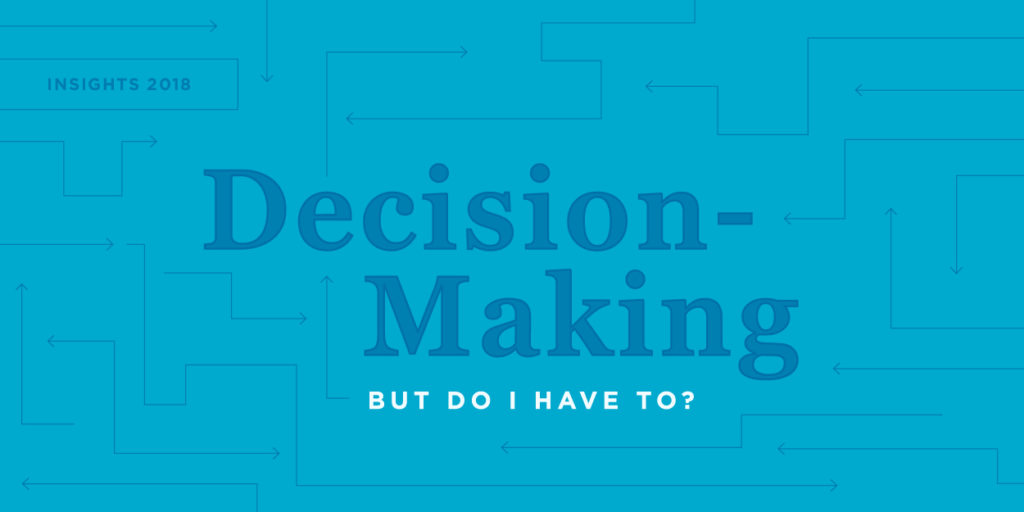
Everyone is a decision maker at some point. Decisions come in many shapes and sizes, but how do we make them effectively? The best decisions are made with a plan in mind, so here are some tips on how to make an effective decision-making plan.
Making the decision alone? Set a deadline and stick to it. This ensures you don’t overthink the choice you are making, causing “paralysis by analysis.” Look for all options and solutions and think about their potential consequences. Whether you make a list or choose an option lottery style, you can make decision-making fun. Getting perspective from friends or family is a great way to approach a decision.
Making a group decision? Make sure to get other perspectives – this can reduce bias. However, avoid getting input from too many people. You can start to diminish your decision-making power, the more people you add to the mix. Make a checklist. You want to keep your goals and priorities in mind while also looking past those goals, asking, “How will this affect us in a year?” Finally, follow up after the decision has been made to see if there are tweaks to make, and get feedback from your group.
Trying to simplify the decision-making process is essential to making sure you focus on the actual decision and how it will affect you, be it big or small. Decisions need to be made all the time. Why not make them painless? Want to know more? Download the full report.
Since Tom Hanks and Meg Ryan first IM’ed each other in You’ve Got Mail in 1998 – largely normalizing online dating in popular culture – claims that we’ve entered a “dating apocalypse” have arisen time and again. Whether or not that’s true, dating has undeniably changed in the digital age.
Dating-focused tools have largely shaped the modern romance landscape.
Beginning with Match.com’s launch in 1995, a plethora of online dating sites and apps have become available to singles looking to find love. Rather than waiting for a chance encounter that leads to finding the one, modern singles can seek out partners on popular apps like Tinder and Bumble.
In terms of meeting like-minded people, these new tools are definitely convenient. However, they also have downsides. For example, curating an online dating profile and vetting possible partners often results in the online dating burnout phenomenon. In addition, the rise in assortative matching through online dating has led to more marriages between financial “equals,” but there is also a resulting paradoxical effect of increased wealth-inequality gaps across households.
New communication tools have changed romance, too.
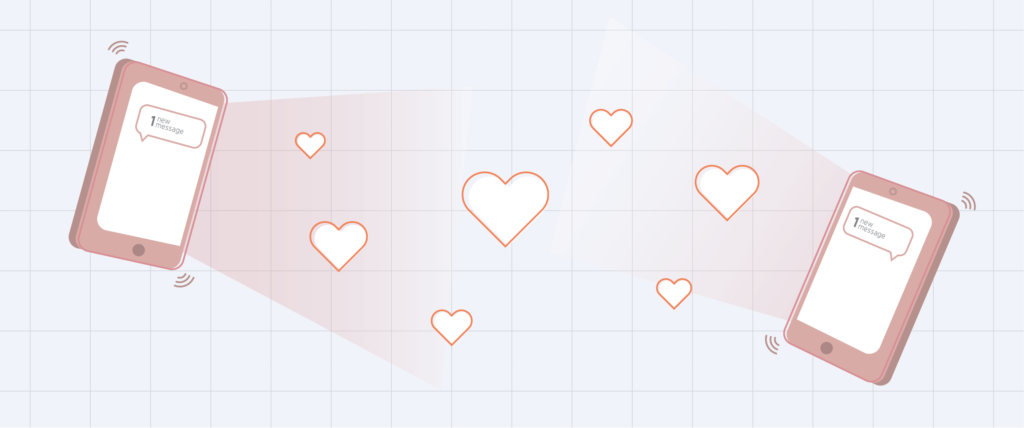
Of course, online dating and dating apps aren’t the only things that have changed our concepts of and behaviors related to dating, romance and love. How we communicate overall has drastically changed in the last 20 years, and tools like texting, video calling and social media have also had an impact, in both positive and negative ways.
One of the positives of digital tools is how video calling can make couples in long-distance relationships feel more connected. For example, in 2015, a public radio station in California showcased Jorge and his wife, Magda, who must live separately in the U.S. and Mexico for 10 years because of U.S. immigration law. However, FaceTime helps them close the gap. Magda often strolls around the streets of her small hometown FaceTiming Jorge on her iPad and introducing him to passersby. When the Wi-Fi is working, she even “brings” Jorge to church with her.
Brands are figuring out how to use modern romance to drive loyalty.
Brands have learned that these new digital tools have both advantages and disadvantages in human relationships and are using that information in marketing. Some brands, like Apple, tend to focus on how their technology brings people together. Others, like Dentyne and Durex, have encouraged disconnecting, tapping into people’s desire to turn off their screens and have in-person interactions. Finally, some brands are actually leveraging these new digital platforms themselves to market to customers. For example, on Valentine’s Day in 2015, Domino’s allowed Tinder users to “swipe right” and engage in a pun-filled conversation for a chance to win a free pizza, resulting in 700 Tinder matches and a potential social reach of more than 200,000.
As new digital tools continue to alter human behavior, relationships and how we think about dating, romance and love will also continue to change. To learn more about the effect digital tools are having on modern romance, download the full report.
If you’ve heard the term “Internet of Things” (IoT), it might have been related to controlling your home’s heat while you’re away or dimming your bedroom lights with a smartphone. IoT refers to inter-connectivity between the internet and everyday devices, so these are certainly two examples. Yet with $772.5 billion projected to be spent worldwide on the IoT in 2018 and 31 billion devices projected to be connected in 2020, they’re just the beginning. And this hugely growing trend has the potential to drastically impact consumers and businesses.
The IoT’s Impact on Consumers
New developments in IoT technology promise to add convenience, efficiency, and automation to many aspects of consumers’ lives including what we wear, how we interact with our homes, how we shop, how we work, how we get from place to place, and how we experience travel. What if your shirt could adjust to your body heat? What if grocery stores could completely eliminate checkout lines? What if your hotel room could lead you through a morning yoga routine on a full-length mirror? These are just some of the questions leading-edge companies are asking and, using the IoT, developers are bringing solutions to fruition.
The IoT’s Impact on Business
The IoT is also having a drastic impact on businesses in every major industry by providing constant access to a huge amount of data and allowing for even greater automation of tasks. In the healthcare realm, for example, the rise of wearables and remote monitoring is starting to help patients become more involved in managing their health and is allowing for more collaborative doctor-patient relationships. In financial services, the wealth of data from IoT-connected sensors and devices has the potential to disrupt everything from retail banking and to digital payments to consumer lending, investments, and wealth management—not to mention the revolutionary potential of the intersection of blockchain and IoT.
Thought Starters
The Internet of Things is seeping more and more into human life every day, impacting how we experience life at home, work, and everywhere in between. How can you harness the IoT in your daily life to benefit from its key advantages: convenience, efficiency, and automation? And how can your industry and your company leverage what the IoT offers to businesses: a constant stream of data and automation of tasks?
Learn more about how the IoT is impacting consumers, healthcare, and the financial industry by downloadingthe full report.
By using our website, you accept our use of cookies as described in our Privacy Policy.
Manage consent
Privacy Overview
This website uses cookies to improve your experience while you navigate through the website. Out of these, the cookies that are categorized as necessary are stored on your browser as they are essential for the working of basic functionalities of the website. We also use third-party cookies that help us analyze and understand how you use this website. These cookies will be stored in your browser only with your consent. You also have the option to opt-out of these cookies. But opting out of some of these cookies may affect your browsing experience.
Necessary cookies are absolutely essential for the website to function properly. These cookies ensure basic functionalities and security features of the website, anonymously.
Cookie
Duration
Description
cookielawinfo-checkbox-analytics
11 months
This cookie is set by GDPR Cookie Consent plugin. The cookie is used to store the user consent for the cookies in the category "Analytics".
cookielawinfo-checkbox-functional
11 months
The cookie is set by GDPR cookie consent to record the user consent for the cookies in the category "Functional".
cookielawinfo-checkbox-necessary
11 months
This cookie is set by GDPR Cookie Consent plugin. The cookies is used to store the user consent for the cookies in the category "Necessary".
cookielawinfo-checkbox-others
11 months
This cookie is set by GDPR Cookie Consent plugin. The cookie is used to store the user consent for the cookies in the category "Other.
cookielawinfo-checkbox-performance
11 months
This cookie is set by GDPR Cookie Consent plugin. The cookie is used to store the user consent for the cookies in the category "Performance".
viewed_cookie_policy
11 months
The cookie is set by the GDPR Cookie Consent plugin and is used to store whether or not user has consented to the use of cookies. It does not store any personal data.
Functional cookies help to perform certain functionalities like sharing the content of the website on social media platforms, collect feedbacks, and other third-party features.
Performance cookies are used to understand and analyze the key performance indexes of the website which helps in delivering a better user experience for the visitors.
Analytical cookies are used to understand how visitors interact with the website. These cookies help provide information on metrics the number of visitors, bounce rate, traffic source, etc.
Advertisement cookies are used to provide visitors with relevant ads and marketing campaigns. These cookies track visitors across websites and collect information to provide customized ads.